By Madison Shaw
Originally published in the Left Hand Valley Courier on April 29, 2026.
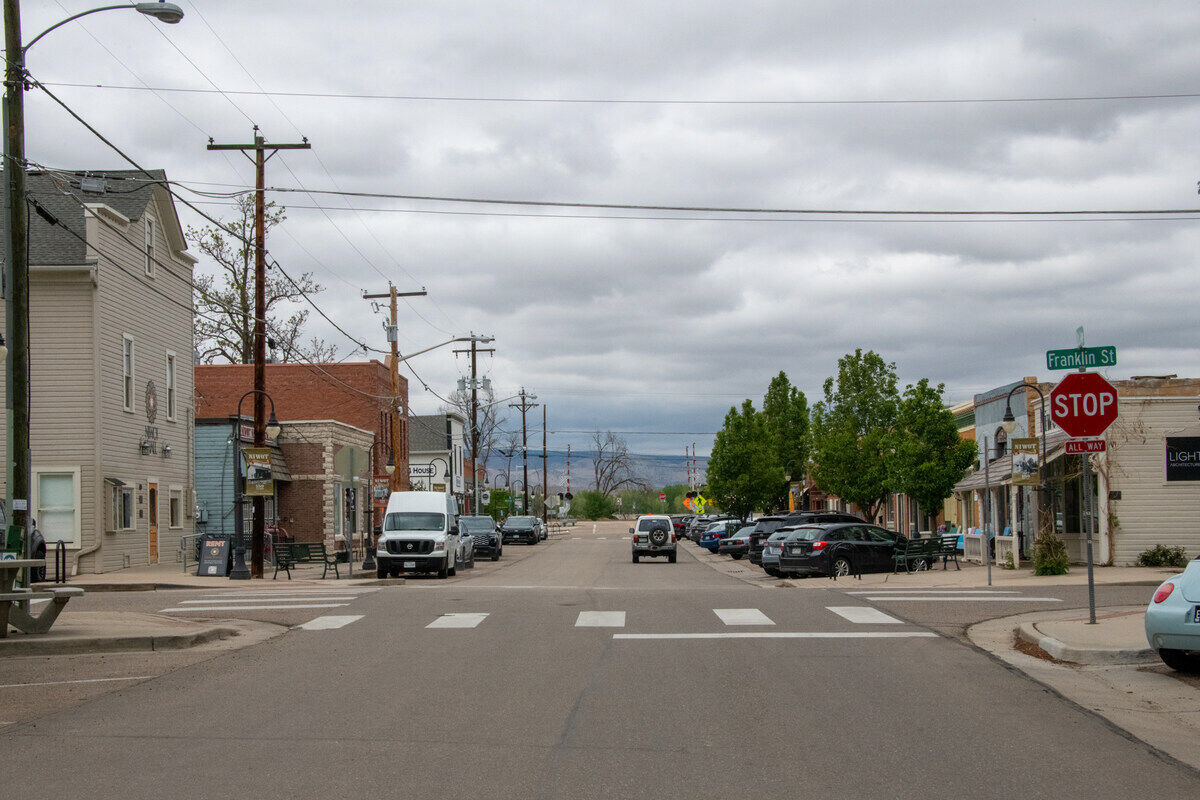
Niwot's Business District (Madison Shaw/Left Hand Valley Courier)
Small business owners in Niwot are beginning to navigate the rise of artificial intelligence, weighing its potential benefits against concerns about accuracy, trust, and the role of human connection in their work.
While AI has quickly become part of everyday conversation, its actual use among small businesses remains uneven. According to the Federal Reserve, about 18% of U.S. businesses had adopted AI as of the end of 2025. For many small, community-focused businesses in Niwot, that gap between awareness and adoption is still playing out in real time.
At the Niwot Market, co-owner Alison Steele said she does not use AI in her business at all.
"I'm not that good with technology or even AI, so I kind of steer away from it," Steele said. "My concern with AI is that it takes human communication and connection out of the equation."
Steele said she is unsure how AI would fit into her store and does not expect it to play a major role moving forward.
That preference for a more personal, hands-on approach is shared by other businesses in town. At Inkberry Books, co-owner Gene Hayworth described the store as intentionally traditional.
"Inkberry Books is a traditional bookstore with old-fashioned methods. We even write out our receipts by hand," Hayworth said.
Like Steele, Hayworth's approach reflects a focus on maintaining a personal connection with customers rather than relying on new technology. Concerns about losing connection are not unique to Niwot. A Pew Research Center study found that about half of Americans believe AI could weaken people's ability to form meaningful relationships.
Other businesses are beginning to experiment with the technology, but often in limited ways. At Fortezza Ristorante, owner Adam Moore said the restaurant uses AI occasionally, though only in a minimal capacity.
"We are pretty minimally involved with artificial intelligence," Moore said. "We use it occasionally, but probably far less than others in the town."
Moore said when the restaurant does use AI, it is typically for tasks like marketing ideas, researching local businesses, and gathering information for its wine list.
For many small businesses, AI is less about replacing work and more about assisting with routine tasks. The U.S. Small Business Administration notes that AI can help with things like drafting emails, creating marketing content, scheduling, and improving customer communication. Still, adoption often depends on comfort level, time, and whether business owners see a clear benefit.
In professional fields where accuracy is critical, AI is already being used, but with caution.
Bruce Warren, an attorney with Warren Moore Rutherford, LLP, said he uses AI as a starting point for research, but always verifies the information.
"I use AI occasionally as a means of quickly finding information that I can then easily verify from traditional legal research sources," Warren said.
Warren said problems arise when users rely too heavily on AI-generated information, particularly in legal work.
"That's when we find that AI can 'hallucinate' and come up with quotes from case citations that sound great, but don't actually exist," he said.
He added that while AI may become more common as it improves, it should be treated as a tool rather than a replacement for human judgment.
"It's always important to verify, always verify," Warren said.
As AI continues to evolve, Niwot businesses are still determining how, or if, it fits into day-to-day operations. For some, it offers potential efficiency. For others, it raises questions about trust, reliability, and the value of human interaction.
In an area celebrated for its small-town feel and personal connections, and in some cases, even handwritten receipts, that balance may ultimately shape how far the technology goes.